Introduction
A career growth plan for beginners is a simple, flexible system for building skills, gaining experience, and increasing responsibility over time—without needing to know your entire future in advance.
Many beginners believe career growth only happens after years of experience. In reality, growth starts from day one when you intentionally develop skills and habits that compound. Without a plan, beginners often drift—working hard but not moving forward. With a basic growth plan, even small actions create momentum. This article explains how beginners can create a realistic career growth plan, what to focus on early, and how to grow steadily without pressure or burnout.
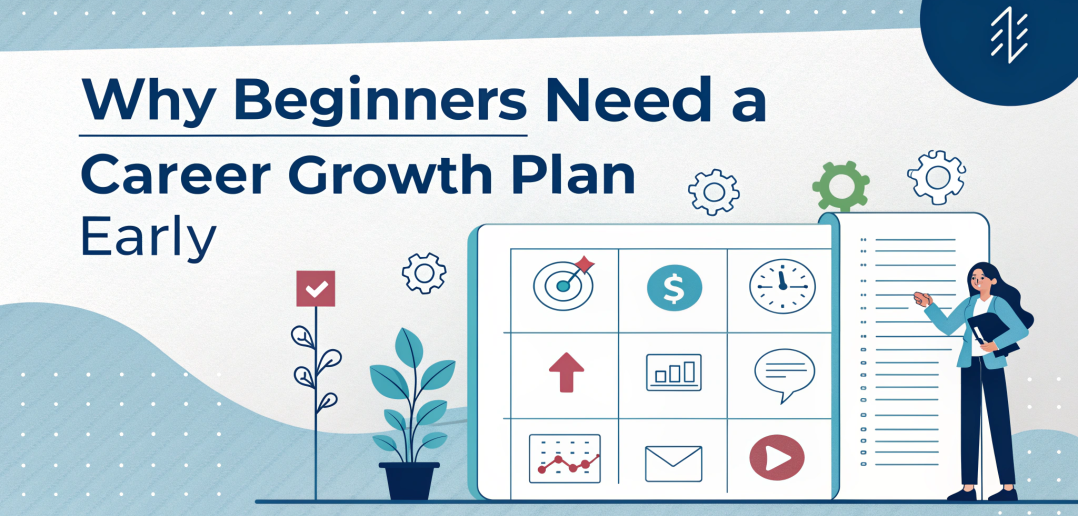
Why Beginners Need a Career Growth Plan Early
Career growth doesn’t happen automatically. Beginners who rely only on time often plateau quickly.
In real workplaces, early growth plans help beginners:
Learn faster than peers
Gain trust and responsibility sooner
Avoid stagnation in entry-level roles
[Expert Warning]
Hard work without direction often leads to effort without progress.
What a Career Growth Plan Really Is
A career growth plan is not a rigid ladder. It is:
A set of short-term learning goals
A focus on skill progression
A method for reviewing and adjusting direction
It prioritizes progress, not perfection.
Core Elements of a Beginner Career Growth Plan
Skill Building (The Foundation)
Beginners should prioritize transferable skills:
Communication
Digital confidence
Problem-solving
These skills apply across roles and industries.
Experience Through Responsibility
Growth often comes from taking ownership, not changing jobs.
This includes:
Handling small projects
Improving existing processes
Supporting teammates reliably
YouTube
https://www.youtube.com/watch?v=ua-CiDNNj30
A simple explanation of how skills and responsibility grow together over time.
Feedback and Reflection
Beginners who grow fastest actively seek feedback and reflect on it.
This turns everyday work into learning opportunities.
Gradual Direction Refinement
Your growth plan should evolve as you learn more about:
Your strengths
Your interests
Workplace realities

Table – Beginner Career Growth Plan Structure
| Focus Area | Beginner Action | Result |
| Skills | Learn core transferable skills | Flexibility |
| Responsibility | Take ownership of tasks | Trust |
| Feedback | Ask and reflect | Improvement |
| Review | Adjust direction | Clarity |
This table highlights growth mechanics, not job hopping.
Common Mistakes Beginners Make With Growth Plans
career growth plan for beginners Mistake 1: Waiting for Promotions to Grow
Growth often precedes titles—not the other way around.
Fix:
Develop skills and responsibility before expecting recognition.
Mistake 2: Overplanning the Future
Trying to map 10 years ahead creates anxiety.
[Money-Saving Recommendation]
Focus on 3–6 month growth cycles instead of expensive long-term programs.
Mistake 3: Ignoring Soft Skills
Many beginners focus only on technical abilities.
Information Gain — What Most Growth Advice Misses
career growth plan for beginners Most advice focuses on where to grow, not how growth actually happens.
The missing insight is this:
Career growth accelerates when skill development and responsibility increase together.
Skills without responsibility stagnate. Responsibility without skills creates stress. Balanced growth creates momentum.
(Unique Section): Real Beginner Growth Pattern
career growth plan for beginners From real early-career paths, beginners who advance fastest often:
Improve communication first
Become reliable with small tasks
Volunteer for learning opportunities
They don’t wait to feel “ready”—they grow into readiness.
How to Build Your Own Career Growth Plan
career growth plan for beginners Choose 1–2 skills to improve this quarter
Identify small responsibilities to own
Ask for feedback monthly
Review progress every 90 days
[Pro Tip]
If your plan helps you improve this month, it’s effective.
FAQ
Q1: What is a career growth plan for beginners?
A structured approach to skill-building and responsibility growth.
Q2: Do beginners really need a growth plan?
Yes. Direction speeds up progress.
Q3: How often should a growth plan be updated?
Every 3–6 months.
Q4: Is career growth only about promotions?
No. Skills and trust come first.
Q5: Can beginners grow without changing jobs?
Yes. Growth often starts within the same role.
Conclusion
career growth plan for beginners A career growth plan for beginners turns everyday work into long-term progress. By focusing on transferable skills, taking responsibility, seeking feedback, and reviewing direction regularly, beginners can grow faster and with more confidence. Growth is not about rushing ahead—it’s about moving forward intentionally. When small improvements compound, careers evolve naturally.