
Introduction
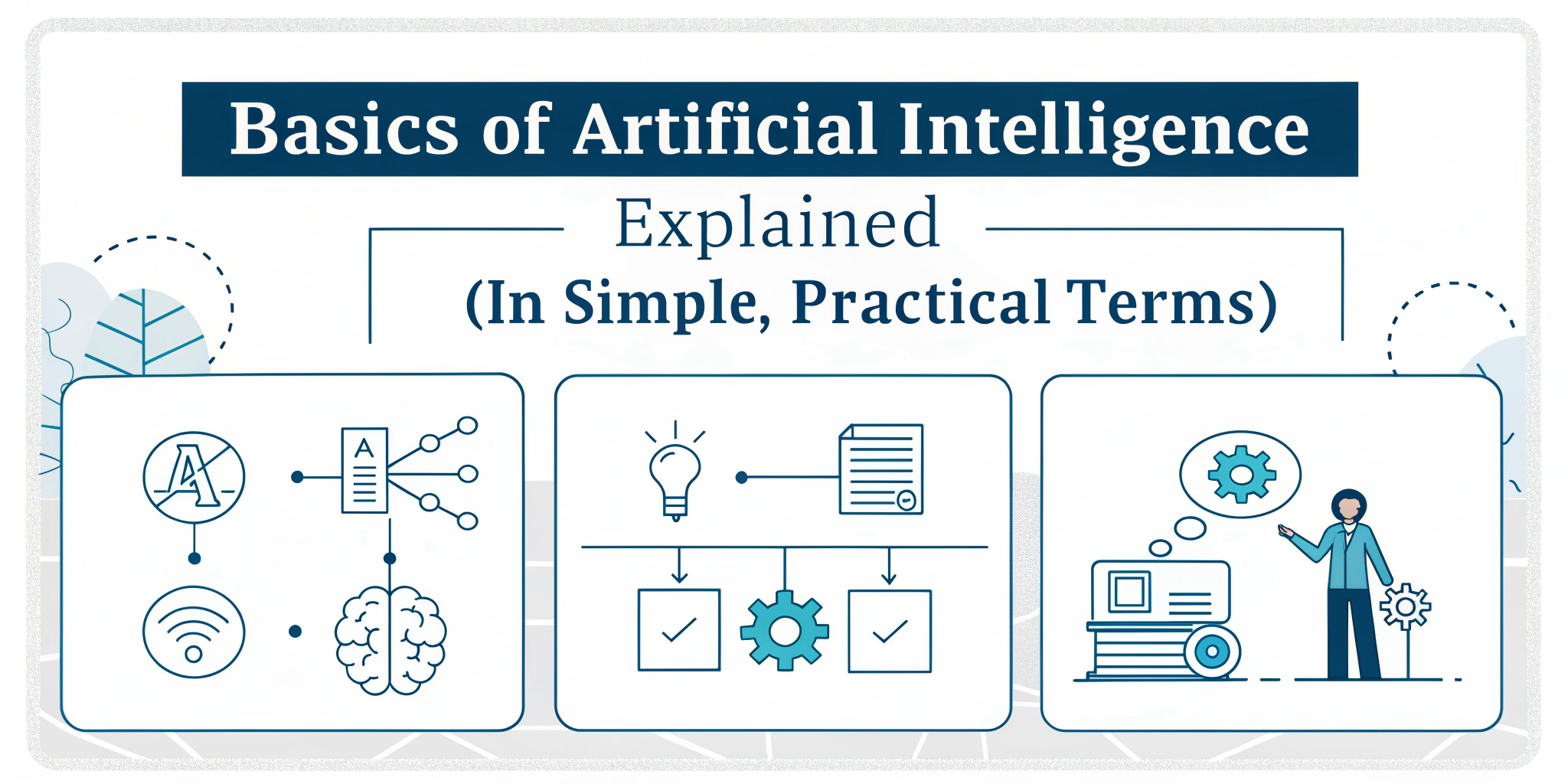
The basics of artificial intelligence explained simply mean understanding how machines recognize patterns, learn from data, and assist humans in making decisions—without thinking or reasoning like humans do.
Artificial intelligence is often described as something mysterious or overly technical. In reality, AI is much more practical and limited than most people assume. You interact with AI every day—through search engines, recommendations, navigation apps, and writing assistants—often without realizing it. This article explains the basics of artificial intelligence in clear, human language, cutting through hype and misconceptions so beginners can understand what AI really is, how it works, and where its real value (and limits) lie.
What Artificial Intelligence Actually Is
At its core, artificial intelligence refers to systems designed to perform tasks that normally require human judgment, such as recognizing patterns, predicting outcomes, or categorizing information.
AI does not think, feel, or understand. Instead, it:
Processes large amounts of data
Finds statistical patterns
Produces outputs based on probability
This distinction is essential for using AI effectively and safely.
[Expert Warning]
Treating AI as if it “understands” information is one of the most common and risky misunderstandings.

How Artificial Intelligence Works (Without Technical Jargon)
Data Is the Foundation
AI systems learn from data. The quality, quantity, and relevance of that data directly affect performance.
If the data is biased, incomplete, or outdated, the AI’s output will reflect those weaknesses.
Algorithms Find Patterns
Algorithms are sets of instructions that tell AI how to analyze data. They don’t create intelligence—they apply logic repeatedly at scale.
In practical situations, algorithms identify correlations, not causes.
Models Generate Predictions
Once trained, AI models generate predictions or responses based on patterns they’ve learned. These predictions are probabilistic, not factual.
YouTube
https://www.youtube.com/watch?v=aircAruvnKk
A visual explanation of how AI learns and why it sometimes makes mistakes.
Table – Artificial Intelligence vs Human Intelligence
| Aspect | Artificial Intelligence | Human Intelligence |
| Learning | From data | From experience |
| Reasoning | Pattern-based | Contextual |
| Understanding | No real understanding | Meaning-based |
| Creativity | Imitative | Original |
| Judgment | Statistical | Ethical & contextual |
This table addresses a key SERP gap: AI imitates intelligence—it doesn’t possess it.
Where Artificial Intelligence Is Used Today
AI already supports many everyday activities:
Search and recommendations
Fraud detection and security
Writing and content assistance
Navigation and route planning
In most cases, AI works quietly in the background rather than as a visible “robot.”
Common Beginner Misunderstandings About AI
Mistake 1: Believing AI Is Always Accurate
AI can produce confident but incorrect answers.
Fix:
Always verify important information independently.
Mistake 2: Assuming AI Is Neutral
AI reflects the data it is trained on.
[Expert Warning]
Bias in data leads to bias in outcomes—AI does not correct this automatically.
Mistake 3: Thinking AI Replaces Human Thinking
AI assists decision-making; it does not replace responsibility.
Information Gain — What Most AI Articles Fail to Explain
Most articles explain what AI does but skip why AI fails in subtle ways.
The missing insight is this:
AI is optimized for probability, not truth.
AI chooses the most statistically likely response, not the most accurate or ethical one. Understanding this limitation is crucial for safe and effective use—especially in education, business, and decision-making.
(Unique Section): Real-World Example of AI Limitations
In real usage, AI writing tools can summarize reports well but may:
Misinterpret tone
Invent missing details
Oversimplify complex ideas
Users who understand these limits use AI as a drafting assistant, not an authority.

How Beginners Should Think About AI Moving Forward
View AI as a tool, not a decision-maker
Use AI to support thinking, not replace it
Always apply human judgment
[Pro Tip]
If AI output sounds confident, pause and double-check—it may still be wrong.
FAQ
Q1: What is artificial intelligence in simple terms?
AI uses data and patterns to assist tasks that usually need human judgment.
Q2: Does AI think like humans?
No. AI processes patterns; it does not understand meaning.
Q3: Why does AI make mistakes?
Because it predicts probabilities, not facts.
Q4: Is AI dangerous?
AI is safe when used with human oversight and awareness of limitations.
Q5: Do beginners need coding to understand AI?
No. Conceptual understanding is enough at the beginner level.
Q6: Is AI always learning?
Only when specifically trained or updated—most AI is static after deployment.
Conclusion
The basics of artificial intelligence explained clearly reveal that AI is powerful—but limited. It works by analyzing data, recognizing patterns, and generating probabilistic outputs. It does not think, reason, or understand context the way humans do. When beginners understand these fundamentals, AI becomes less intimidating and far more useful. Used correctly, AI supports better decisions and productivity. Used blindly, it introduces risk. The difference lies in understanding.


